 Fundación Fraunhofer Spain Research
Josep Samitier joins Fraunhofer Spain Research as Director
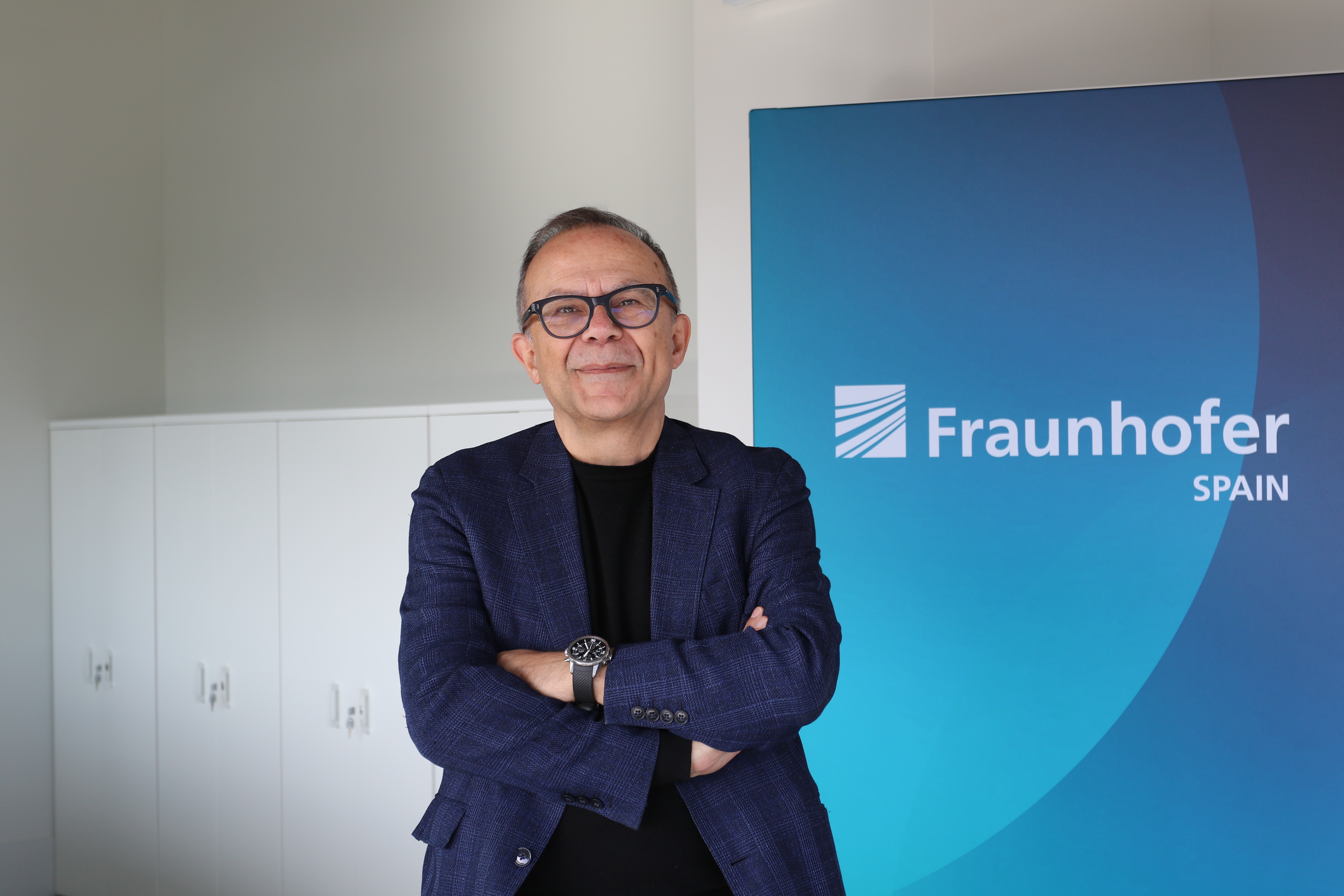
Josep Samitier Martí joined Fraunhofer Spain Research as its Director on 1 January. Located at the Barcelona Science Park (Parc Científic de Barcelona), the organisation promotes applied research projects in bioengineering and health. Its activities began with the Fraunhofer Center of Applied Theragnostics (Fraunhofer CAT), which is co-directed by Elena Martínez and specialises in theragnostics, a field that combines diagnosis and precision therapy. To mark his appointment, Fraunhofer Spain Research interviewed Josep Samitier to find out more about his vision for the centre's objectives, the areas of work that will be developed and Fraunhofer CAT's strategic role within the European health innovation ecosystem.
What is Fraunhofer Spain Research and what is its mission?
Fraunhofer Spain Research was established to bring the Fraunhofer model of applied research to Spain. This model is firmly focused on generating a real impact on society and industry, based on knowledge generated in academia. We are talking about excellent research that is always connected to concrete clinical, technological and business needs.
Our purpose is to act as a bridge between scientific knowledge and its practical application, accelerating the transfer of new technologies to the market. In the field of health, the core activity of the first centre promoted by Fraunhofer Spain, we contribute to innovation within the healthcare system.
What role does Fraunhofer Spain aim to play within the scientific and business ecosystem?
Fraunhofer Spain's goal is to become a leading player in applied research in Spain, as well as a key link between the international Fraunhofer network and the wider European ecosystem. This involves facilitating collaboration between universities, research centres, hospitals, start-ups, technology centres, companies, and public administrations.
Rather than competing with the existing ecosystem, Fraunhofer Spain strengthens it by contributing expertise in innovation and technology transfer based on academic knowledge, prototype development and scaling solutions with industrial potential and internationalisation capacity.
The first centre promoted by Fraunhofer Spain is Fraunhofer CAT, dedicated to theragnostics, a field that combines diagnosis and therapy. What opportunities do you see in this area and why is it strategic for applied health research?
Precision medicine and emerging advanced therapies require technological development based on innovations generated through cutting-edge science. These innovations are essential to ensure that new diagnostic systems and personalised therapies are affordable for public healthcare systems and accessible to society as a whole.
This is a key goal when it comes to addressing the social challenges associated with rising life expectancy and responding to health issues for which there are no satisfactory solutions yet.
How is collaboration between Fraunhofer and the Catalan ecosystem structured?
One of the project’s greatest strengths lies in the collaboration between various entities in Spain. The Ministry of Science and Innovation, the Government of Catalonia and the Barcelona City Council have played an extraordinarily important role in connecting frontier research with innovation through their involvement and commitment to this shared effort.
Fraunhofer CAT, the first centre to be established by Fraunhofer Spain, brings together Fraunhofer-Gesellschaft's expertise in applied research and the scientific and technological capabilities of the Catalan bioengineering and biomedicine ecosystem. The Fraunhofer Center of Applied Theragnostics (Fraunhofer CAT) was established through the long-standing collaboration between the Fraunhofer Institute for Biomedical Engineering (IBMT) and the Institute for Bioengineering of Catalonia (IBEC), two of the leading research institutions in this area. The University of Barcelona also provided support and collaboration.
What does it mean for you to take on the role of Director of Fraunhofer Spain at this time?
I see this as a great opportunity to accelerate the innovative potential of the science developed in our country over the past 25 years. My experience as a university manager and later as director of a research centre such as IBEC has convinced me that we can only build a better future based on scientific knowledge through processes that generate synergies, shared commitment and strong connections, both locally and internationally.
Fraunhofer Spain is another piece in this system, designed to act as a catalyst for joint initiatives within our research and innovation ecosystem.